
Overview
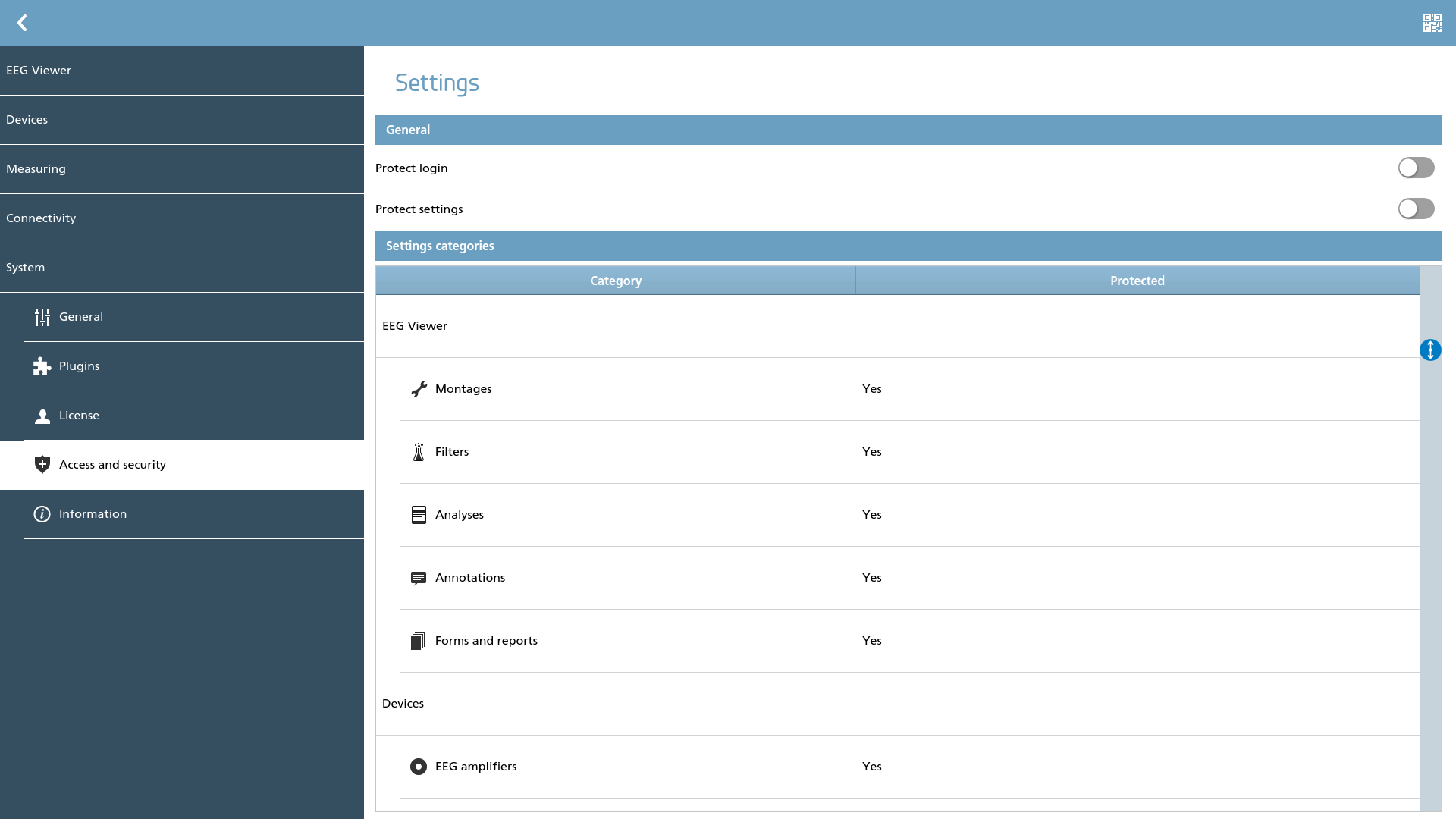
Here we can implement restrictions on access to the program itself and specific settings. To activate the settings, one must utilize the activation slider adjacent to the desired options. To ensure the security of the login process and/or safeguard the settings, it is necessary to slide the corresponding slider.
In the ‘Select categories’ section, individual configuration elements can be secured. To modify the protected column, simply double-click on it and slide the slider to enable protection for a particular configuration element.
It is essential to establish a One-Time Password (OTP) prior to enabling protections. Therefore, select the Generate QR action from the action toolbar to set up an OTP.
|
Icon |
Description |
|---|---|

|
Generating a QR Code for One-Time Password (OTP) To create a One-Time Password (OTP), navigate to the OTP setup screen where you can generate the OTP using a QR code. |
Create OTP
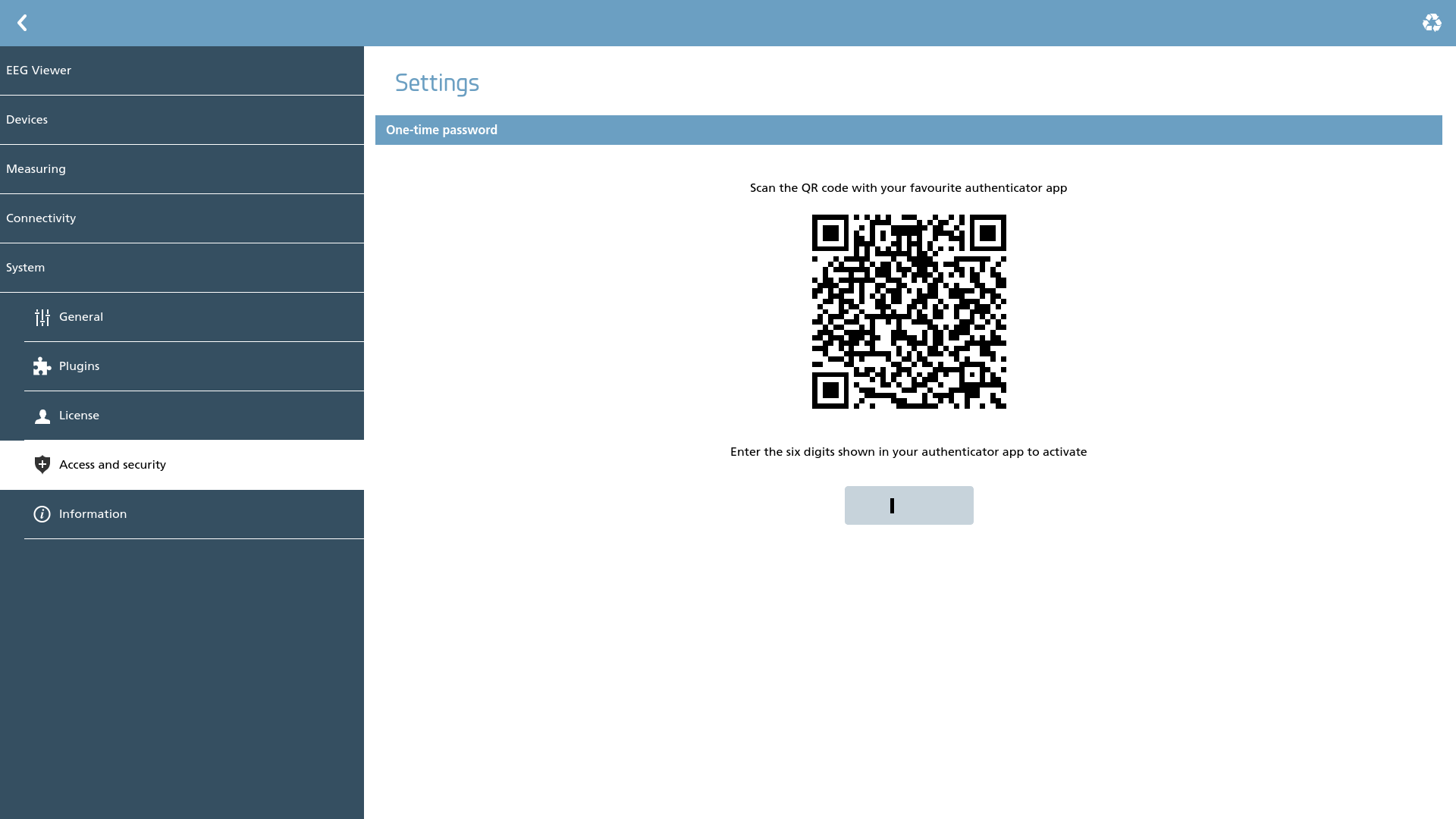
Here, you can create a QR code for integration with your authenticator application. To generate a new code, simply select the generate action from the action toolbar. To validate the code, enter the 6-digit code that appears in your authenticator app after scanning the QR code.
|
Icon |
Description |
|---|---|

|
Generating a new QR code Generate a new QR code for the authenticator app. |
Behaviour in case of detected security failure
Detected failure to maintain security
If a situation is detected in which security cannot be maintained, NeuroCenter EEG will notify the user by means of an error message, warning, or other appropriate system notification. Where applicable, the affected network or data exchange function may be blocked, restricted, or suspended until the issue is resolved.
Such a situation may result in temporary disruption of data exchange, reduced availability of certain functions, or delay in the clinical workflow. Locally available functions may remain available where applicable, but the user shall assess the situation before continuing clinical use. A detected security failure may affect data availability, the integrity of data exchange, and workflow continuity, but does not result in uncontrolled modification of patient data without user action.